Innovator and Free Thinker
 178 Comments
 Paul went to The University of Illinois in Chicago. He studied Chemistry in order to continue in his father’s footsteps and continue the pharmacies that his father built. Paul became very unhappy with his decision and left school after a year. He worked in a commissary. While stocking shelves a can of Van Kamps beans fell on his head. He fell unconscious and was taken to the emergency room. The nurse that attended him was male. Paul and he talked and Paul decided to go to nursing school in Chicago. There were 2 males in his class.
Paul Obis ate his last hamburger sometime during 1970 in a Burger King on Broadway. “It was during the Vietnam War and everybody was saying things like, “Suppose they gave a war and nobody came,” and “Don’t pay war taxes, because even that small amount can buy an M-16 or a round of ammunition.”
“So I was thinking about how the small things we do all add up into the big things. If one person throws out a piece of paper, it’s just a piece of paper on the ground, but when everybody does it, we have a litter problem. I was sitting there, eating, and I thought, ‘A lot of people in the world don’t eat meat. How many cows will I eat in my lifetime? I don’t have to contribute to this’–and I left without finishing that burger.”
This was a pretty big step at a time when “most vegetarians were into eastern religions or were Seventh-Day Adventists.” Seventeen years ago, “antiwar literature was abundant, but vegetarian cookbooks were few and far between. Diet for a Small Planet, Laurel’s Kitchen, Moosewood Cookbook and the other vegetarian classics had not yet been published. Bill Shurtleff, author of The Book of Tofu (published in 1975) and other books, was discovering natural foods at the Tassajara Zen Mountain Center … There were but a handful of natural food stores, most of which sold vitamin supplements and protein powders for weightlifters. There were no meatless ‘convenience foods’ — whole-grain mixes, tofu entrees or veggie burger mixes. There was no such thing as ‘lite’ foods, except for sodium-free ‘dietetic’ items (the packaging made it look like a prescription was required). Soymilk was virtually unheard of and even yogurt was a rare item.”
While he was in nursing school and working summers at Montrose Beach as a lifeguard, Obis had time to do some writing on Vegetarianism in addition to his nursing, getting his work published in the Chicago Seed, Chicago Express, and the Triad Radio Guide. For the early Reader he parodied the pseudo-mysticism of Carlos Castaneda’s Don Juan books and offered a first-person vignette in the life of a caffeine addict. But when he came up with a story close to his heart–“Being a Vegetarian Is Never Having to Say You’re Sorry–to a Cow”–neither the Reader nor the Express was interested.
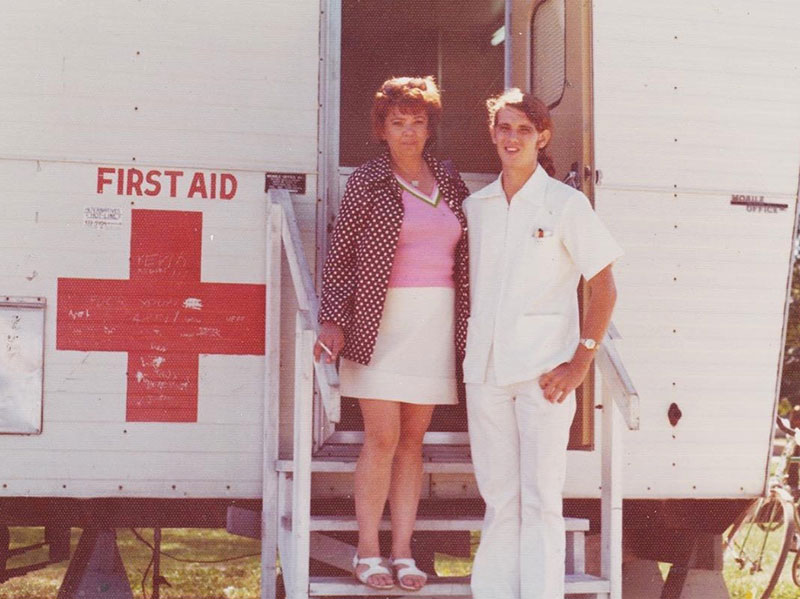
“So I thought, ‘Freedom of the press belongs to those who own one.'” He put together a four-page handout, called it Vegetarian Times, and — not owning a press–had 300 copies run off at a north-side quick-print shop. “It cost $17, and I got two subscription coupons back, $6. I thought that was kind of neat, and I was working as a nurse, I could afford to lose a little money on this.” At the time he had a less-than-onerous job in a first-aid trailer at Loyola Beach. The half-dozen or so people who would wander in on an average day rarely had a problem more serious than a piece of glass in the foot. The rest of the time Obis was free to write. The little “magazine” grew from 4 pages, to 16, to 24, and its circulation inched upward, too. “Stores in other cities began to carry it. We’d get a subscription from Boise, Idaho, and say, ‘Wow! That’s really something!'” Somehow, though, the original article whose rejection had sparked the whole project disappeared without ever finding its way into print.
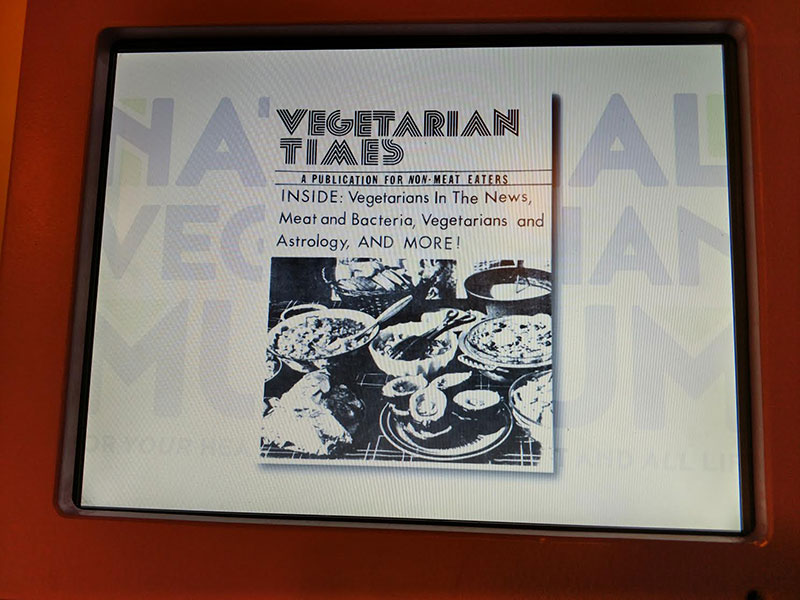
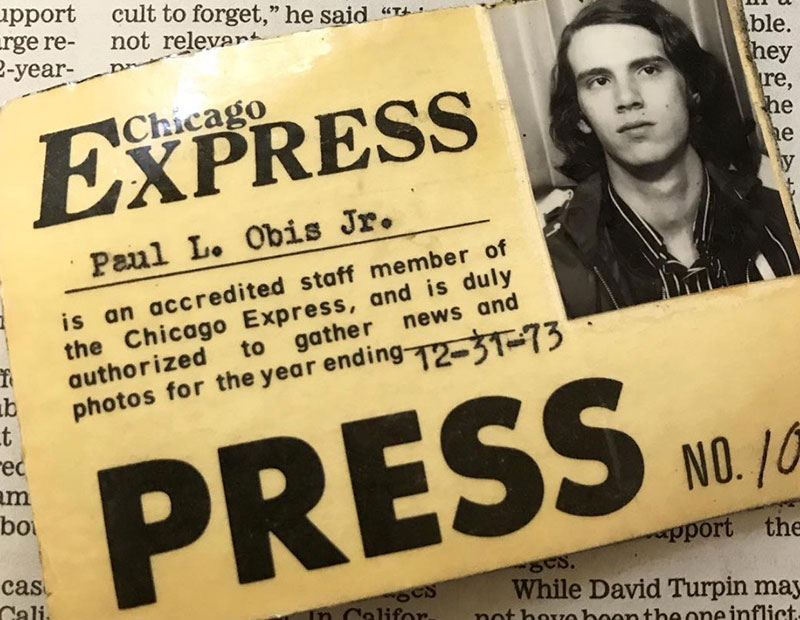
When the first issue of Vegetarian Times appeared in 1974, the topic was so obscure that the founder, Paul Obis, felt compelled to specify in large print that it was “for non-meat eaters.”
Mr. Obis, then 23, hopped on his bicycle and delivered free copies of his four-page newsletter to health-food stores in the Chicago area.
Paul and I were friends in nursing school. I remember his launch of the original VT when we were students. It all started on his mimeographed newsletter. Freethinker. Innovator. Heck of a nice guy. My brother also passed away from complications of Lewey Body Dementia. May Paul s memory be a blessing to all who knew and loved him.
In 1973, Paul did not know other vegetarians so he put up a few sign in health food stores. “Vegetarians, lettuce unite.” He met some fellow vegetarians who took to having pot luck meals together regularly.. They had a turkey free Thanksgiving and sent out press releases and Channel Seven went to the festivity and put them on the 6:00 pm news.
Please tell Paul that VT was a lifesaver for me, especially as an early teen with no vegetarian contacts or connections. I always enjoyed the Thanksgiving dinner, although it was a royal pain to organize. What he did for health and humanity was monumental.
The Veggie Cook – We’ve come a long way.
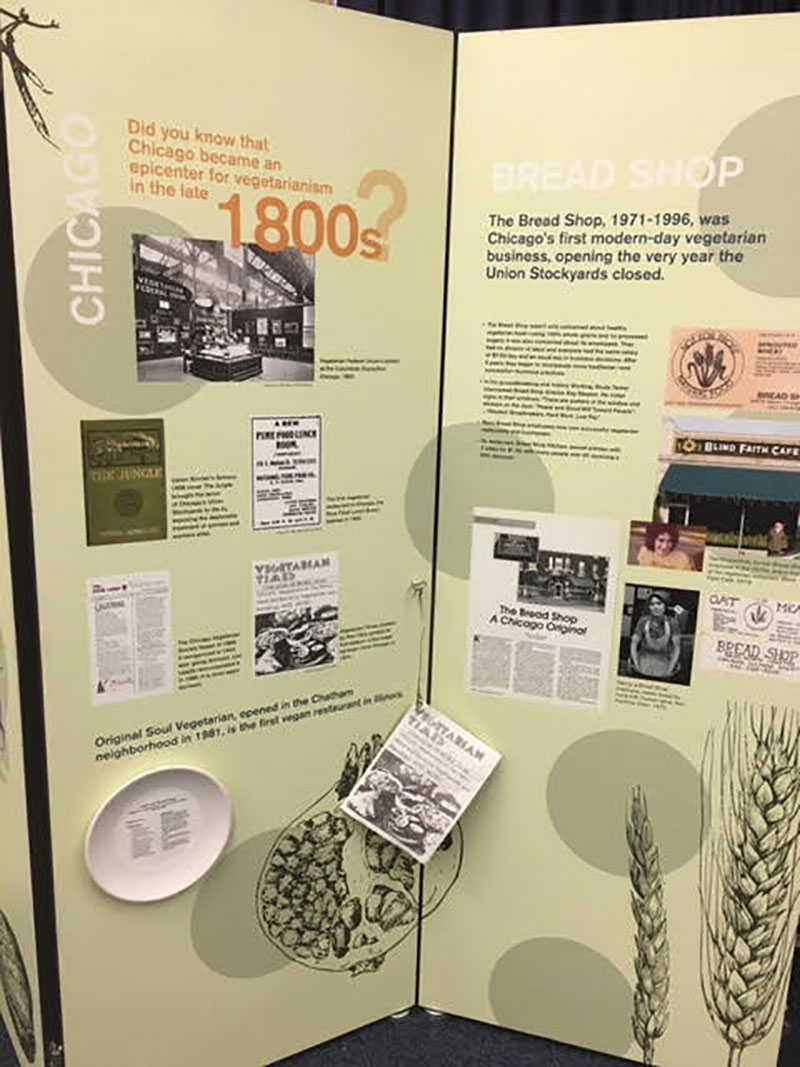
It was quite a heady experience when I opened the Bread Shop in 1971. There was no other vegetarian business in town yet and so creating a whole grain bakery with an adjacent vegetarian grocery store — with my borrowed $1,000 — was beyond exhilarating. It was my first step toward saving our planet.
I remember Paul Obis, one of my customers, walking into the back area one day, where I was busy chopping away at something or other. He handed me a double-sided typed sheet of paper and informed me that it was a copy of his new magazine, Vegetarian Times. I loved it and read it to this day.
The magazine celebrated its 400th issue in 2013 and Paul told me that he’s quite proud that it has survived and prospered all these years. He created a legacy. Paul recently lent me all of his back issues of the magazine and, while browsing through them, I came across this unique, simple and delicious soup from February of 1986.
I recall correctly, Paul and Clare had 5 or 6 boys, but no girls their only child I met was their first, Nicolas, twice, first time at a Sunday morning service at Frank Lloyd Wright’s Unity Temple in Oak Park, the sermon was about Isaac Bashevis Singer, a vegetarian, and the second time at Nicolas’ 1st or 2nd (though I think it more likely was his 1st) birthday party at their home in Oak Park in the summer of 1980.
I gave Nicolas a large set of crayons and some coloring books, a few weeks later I informed Paul that I had regrettably learned that, oh horrors, crayons are made with animal fat.
In Paul’s characteristically quick and sharp humor, he quipped, “It’s too late, Nicolas already ate them!”
Mark and Paul at the beginning of “Vegetarian Times”.
I know you mean 1980’s, and I remember Lori, who published a veg guide to Chicago back when the only restaurant that came close to being all-veg was not even in Chicago, but in Evanston.
Actually the very first Un-Turkey Thanksgiving celebration in Chicago was organized by Paul in 1979, and was catered by Chef Ron Pickarski, this was before he left the Brotherhood or wrote any of his cookbooks and it was at this event was where I first met Ted Zagar, who later for 2 years wrote a Vegetarian Astrology column in Veg Times.
Paul’s humanity
I had known Paul since 1977 and the seminal days of Vegetarian Times, for which I later would write many articles. I owe to Paul more than to anyone else the publication of my first book, Radical Vegetarianism. I had advised Paul that a publisher expressed some interest in my book espousing veganism back when not even vegetarians knew the word or its tenets. And I told Paul that the publisher might contact him to ask him his opinion of the manuscript, which Paul had read. But instead of waiting to hear from the publisher, Paul seized the initiative to write a glowing letter to the publisher praising the manuscript. The book indeed was published in 1981. And yet, at the time, Paul was only a vegetarian, not a vegan. And at that time, neither had I yet met Paul in person, nor had I yet written any articles for VT. Essentially, I was a stranger.
I first met Paul 3-4 years after opening The Bread Shop in 1971. I was chopping something or other in the back of my restaurant, Bread Shop Kitchen. I remember him strolling into the back area, telling me that he had just started the first vegetarian magazine, Vegetarian Times, and wanted me to see it. I was quite thrilled with the double-sided typed sheet and, perhaps, even more thrilled when he gave me that very first edition, about four years ago, to be included in the National Vegetarian Museum. We had it plasticized and now everyone can share my initial thrill at first seeing it.
I’m a very old friend of Paul from IMMC School of nursing. I taught Paul how to drive a car with a manual transmission and he taught me how to parallel park. We once drove from the Grand Canyon in Az to Illinois NON STOP. What an experience.
Paul could strike up a conversation and make friends with anyone, anywhere. A very special person who will be deeply missed.
I am so sorry. for your loss..what a great magazine that was.
Loretta Christine
We have a collection of Vegetarian Times that we use, may of which have embedded into our repertoire of recipes. I’m sorry for your loss – Paul’s legacy lives on.
Nancy Brown
Elizabeth López
I remember! What a great service!
The magazine has been a big help to me. It sure did give me a great start towards going vegan. I have used many recipes from the vegan section. Thank you for introducing him to us on a more personal level and I am very sorry for your loss.
I think the connection between Paul and educating people about the topic of vegetarianism is where his legacy will prevail, and honoring that annually would be meaningful and inspiring. Thanks Janeen for reaching out to Brown University to have that accomplished.
Thomas R. Leavens
Paul drove a cab while he was in nursing school. He said he loved it because he had free time, could park anywhere in the city for free, and always \had money in his pocket.
Paul was one of 2 men in nursing school so the university gave him and the other guy a full apartment rather than a dorm! He loved it.
Yep, I was the other guy. Our first apartment was at 833 Wellington Ave in Chicago right across the street from IMMC. Later we moved to 908 Oakdale and roomed with a Japanese MD, a black dentist, and a crazy cat named Fritz. Those were the days!
He was a true pioneer!
Thanks for sharing that.
ennifer Luna Watson
We’ll certainly post about your interactive memorial to your husband. VT played a key part in my becoming vegetarian in 1991 and vegan in 1993 and becoming an active member of the global veg community. I still keep my boxes of VT as mementoes of my early days being veg*n.
I actually purchased a copy of the very first issue of Vegetarian Times. It was at a World Vegetarian conference in Maine the summer of 1974. I have kicked myself a million times for not keeping that issue.
Laura Frey
I am sorry for your loss. When I first became vegetarian nearly two decades ago, Vegetarian Times was a lifesaver to me. I knew no other vegetarians and got no support from my family, so it was the highlight of my month to get my copy in the mail. I was encouraged and inspired by VT and am very grateful for it.
So great to read it. Im sorry for your loss. its so interesting to read & learn that the revolution started years ago and its show that over time we can expect many more vegans. as we are taking active part of the biggest revolution in the 21st century.
Not only for us but mainly for other living being
Thanks for sharing❤️ Im sure he is resting in peace😍
He remains the essence of wondrous beauty
Looking through the timeline I can see he was a truly wonderful man and we all owe much to him and his legacy.
It’s people like Paul who are the foundation upon which the whole vegan movement is built.
I was am avid reader of vegetarian times 💜 i am sorry for your loss. A truly great man!
I am so sorry for your loss. He made a huge impact on the nutritional community.
He certainly began one of the best movements in our country. Really brilliant of him. Blessings to you. 🌷
I read 3 magazines in the 70s..mother earth news, vegetarian times and mother jones.
I LOVE VT!
Wow Janeen….thank you for sharing this about your late husband….we thank him and salute him for all he has done to start the Vegan movement as we know it
I am completely blown away. There should be a statue erected to your husband, one of the first warriors in the movement which has paved the way for some many people to reach the level of veganism. I’m so, so sorry for your loss. And for ours.
I was an early subscriber to the Vegetarian Times before I became Vegan. Of course, we were of the generation that did not witness Dairy factories, only cows grazing in the fields free in the sun and air.
Konstantina Gkzimpala Źle jak tak ludzie szybko odchodzą.Kondelencje dla męża. Dobrzy ludzie idą od razu do raju . dziękujemy za jego wkład w jego pracy dla tak wspaniałej rodziny Vegan .
I was first inspired by the magazine.
Thank you Janeen. Paul was always very nice to us.
Though predating us starting the group in Baltimore in 1982, I believe Paul worked with Jonah House in Baltimore before that. Do you
have information on that? When I volunteered with the United Farm Workers in Manhattan before that, they interacted with the
Catholic Worker, which I imagine had related beliefs to Jonah House
Thank you so much for sharing this. He and I worked on several events together. He was tireless and compassionate. I’ll never forget him.
He had a profound influence on the vegetarian and vegan movement in Chicago. Before him, there is no consciousness of it here. And with his magazine, he spread the idea of vegetarianism around the country. May his memory forever be a blessing.
Save The Seeds Story:
Paul got an old Hill Bros. coffee can and write Save the Seeds on the front of it and Love All on the back and put it on his front porch in Oak Park to see what people would do with it. At the end of the day, there were seeds and money in the can.
Paul was deeply touched at the goodness and generosity of people.
When he told me the story – we both choked up….
Cynthia Giannone I love that magazine! I’m sorry for your loss. Wishing your and yours strength and peace.
He and I coordinated many events including the Turkey-Free Thanksgivings. I loved those big community gatherings. As for Vegetarian Times, it gave me a sense of not being alone when I was a teenager. Remembering him with appreciation.
When I tried vegetarianism back in the early ’80s, Vegetarian Times was one of the few resources I could find. Especially living in West Texas, it was difficult because there weren’t a lot of cookbooks and, of course, no internet yet. I loved the mag. I just wish I’d stuck it out. It only took 30 years for it to become easy!
Janeen, I’m so sorry to read this. I was reading Vegetarian times back in the 80’s as it was the only magazine for vegans. I still have several years worth of them sitting in my house. May he rest in peace.
VT was a very fine magazine. It was a trailblazer raising consciousness during the years when there was very little out there concerning vegetarianism. He lives a wonderful legacy.
I am so sorry to hear about your loss. You folks have been a real force in making this world a better place. When I went vegetarian ( now vegan) in 1991, that ‘zine was like my bible….and I had a subscription to it continuously for many years…..
Your husband’s message lives on! ❤️
Paul was ‘of the future..🌿🕯
lla Magers Wow Janeen .. What a pioneer Paul was to have created something so revolutionary at that time! I’m sorry for your loss. Thanks for sharing the amazing memorial site you created with us🙏💞
I was raised vegetarian but didn’t have any veg friends. This magazine, which I started reading as a teen, really helped me not feel so isolated or as the kids in school said, “weird.” Thank you for sharing and reminding me and for all his work. His legacy should be celebrated.
VT and all the little mom and pop “health food” stores back then were trailblazers. Hahaha I feel so old when I say things like “kids these days don’t know how good they have it to pick up anything you want at most any store you walk into…and don’t get me started on the internet! Because I had to drive MILES and ORDER food and come back days/weeks/once even over a month later to pick it up! AND I had to BUY cookbooks and VT in PRINT just for recipes!” LOL Thank goodness times have changed. Thank goodness Paul was the innovator he was! ((HUGS)) and peace!
I’m so sorry for your loss! What a great thing he did!
Claro que gusta!!! Gracias
I’m so sorry for your loss Janeen. Thank you to your husband for being one of the pioneers who we can thank for all of our options we have today!
It was a lovely magazine, and what an amazing contribution to the world he made. Read it in my young days and was like cracking open a new world. So sorry for your loss.
That is such a sweet memorial — I loved the format. Thank you for sharing, Paul was clearly a very special person!
I’m so sorry for your loss. It’s hard.Thank you for sharing and honoring your husband with us. He sounds like a trailblazer!!!
My good friend and mentor, Paul Obis, passed away yesterday. Paul was the founder of #VegetarianTimes magazine and one of the most forward thinking, creative and intellectually energetic people I have ever known. Those of us who worked with him at the magazine were fortunate if, for nothing else, to have been exposed to the brilliant and humanitarian force of one man’s particular brand of eccentricity and good will.
Paul was a nurse, the father of six boys, a man of humble heart, unalloyed passion and fearless conviction. He was neither afraid to fail nor was he afraid to change his mind, despite the anger of those who would insist on his remaining on a single track. He started the magazine by printing it in his home, carting the issues around on his bike, selling it to whomever was ready to buy.
When I made a pitch to Paul that he hire me as an editor despite my lack of journalistic experience, he took me on. “Give me three months with no pay and see what you think,” I said, and he did, beating me at my own game by offering to pay for my commute and for child care and, eventually, bringing me on full time. A few years later when my family moved to Malaysia, he kept me on as a roving correspondent and then welcomed me back when I returned. He was kind, trusting, naive and smart and I was humbled by him, always.
And how much fun we had! We interviewed all the veg celebs of the day, from Linda McCartney, Dr. Heimlich of the Heimlich maneuver, the mayor of Bangkok, Francis Moore Lappe, #allieSheedy and #RiverPhoenix . . . anyone who took a stand for animals, the environment or optimum health. We were the darlings at the natural food expos, the best place on earth for ad placements, the magazine of choice for up-and-coming (or established) doctors and writers who wanted their ideas published or their recipes (and recipe books) made famous. By the time I came on staff, in 1985, we were just reaching a paid subscribership of something close to 250,000 readers with thousands more issues published for sale in health food stores and retail outlets.
Yet as much as we were influential we were also intimate; Paul made sure of that, with his goofy humor, his walk-around management style, his interest in our lives and our loves. And we loved him, on most days anyway. Loved his stories, loved his goofiness, loved his wife, loved his generosity, loved the opportunity to be working for one of the great madmen of our times. And he loved us all back #sallyhayhow, Mark Cullen, Greg, Bob, #Jangahala, our darling Judy, Laura Hoemeke, #leeniefolsom, Andy . . .
I love you Paul. Always did, always will. Thank you. Namaste. May you rest in profound peace.
I did not know your husband, but VT was a staple in my life. I became a vegetarian in Ohio 28 years ago at age 16 and before finding VT I subsisted mainly on iceberg lettuce! Little did I know until just now I’d end up living in the same town as the founder. Thank you and yours for having such a healthy impact on my life!
Vegetarian times was my first veg subscription over 14yrs ago
Thank you Paul!
I still have a few copies of Vegetarian Times since when I decided to go vegetarian. That was 20 years ago!
Thank you Paul for all your work promoting this healthy and compassionate lifestyle!
Thank you for sharing this Janeen. So sorry for your loss. What an incredible tribute and amazing impact he made.
What a beautiful memorial. Thank you for sharing. He sounds like he was an amazing man. 🙂 Thank you for continuing to spread the word about his work and the moment.
“If you do follow your bliss you put yourself on a kind of track that has been there all the while, waiting for you, and the life that you ought to be living is the one you are living. Follow your bliss and don’t be afraid, and doors will open where you didn’t know they were going to be.”
― Joseph Campbell
Hey respect to him
I thank you for your wonderful contribution, stay blessed
Thank you for sharing this, I just enjoyed reading about his life. So many people through the ages have helped bring Veganism to be what it is today and I am thankful of them all.
I worked at a public library for 10 years and always made sure Vegetarian Times was front and center for check out.
So sorry for your loss! I loved vegetarian times as a kid and as an adult. It really helped me, particularly when no one around me was vegetarian.
I’m so sorry for your loss. If it weren’t for your husband’s work, my vegetarian food would have been a lot blander, and I might have never pursued a culinary career, eventually becoming a vegan chef. I still have my 1st vegetarian cook book, spills, stains, and all the rest.
So sorry for your loss. ❤️ Your husband was a trailblazer and deserves to be remembered forever.
So sorry for your loss. Vegetarian Times changed my life.
Love to you be proud and always remember the good he did
That is beautiful.
Sorry for your loss! He was a pioneer for sure. The world needs more like him.
Hi Janeen, Thank you so much for reaching out, and we honour the contribution made by your husband to the Vegetarian and Vegan community. Going through his timeline painted a vivid picture of such a colourful life! We have forwarded this to our entire team beacause we love to stumble upon empathetic individuals who share the same vision and cause 🙂 We wish you all the very best in love and life, warm regards,
So sorry for your loss. I subscribed to The Vegetarian Times for many years. It was a big help back in the days when there was no Internet, it made you feel not alone when most people thought your way of eating was strange.
Terri Thomas Excellent magazine!! I subscribed to it for many years
Sincere condolences Janeen. He was a rare and deeply appreciated gift to the world.
Thanks for sharing and for your service to Vegetarianism and the plight of animals.
That is a truly beautiful tribute. Thank you for sharing. ❤️
Thank you for sharing with us your beautiful tribute to Paul! Such great loss, but such beautiful memories and blessings in the knowledge how many people he helped in life! Blessings to you Janeen❤️
So sorry for your loss Janeen. He sounds like he was an amazing man.
Praying for your comfort and peace.
Wow great accomplishment.
I’m so sorry for your loss. What a wonderful man 💕
This was a very interesting read about him and his life! He was a very important part of the vegan movement! Thank you so much for sharing! I am so very sorry for your loss. Big hugs to you ✨💗✨
Sorry for your loss, he was an influential and enlightened man.
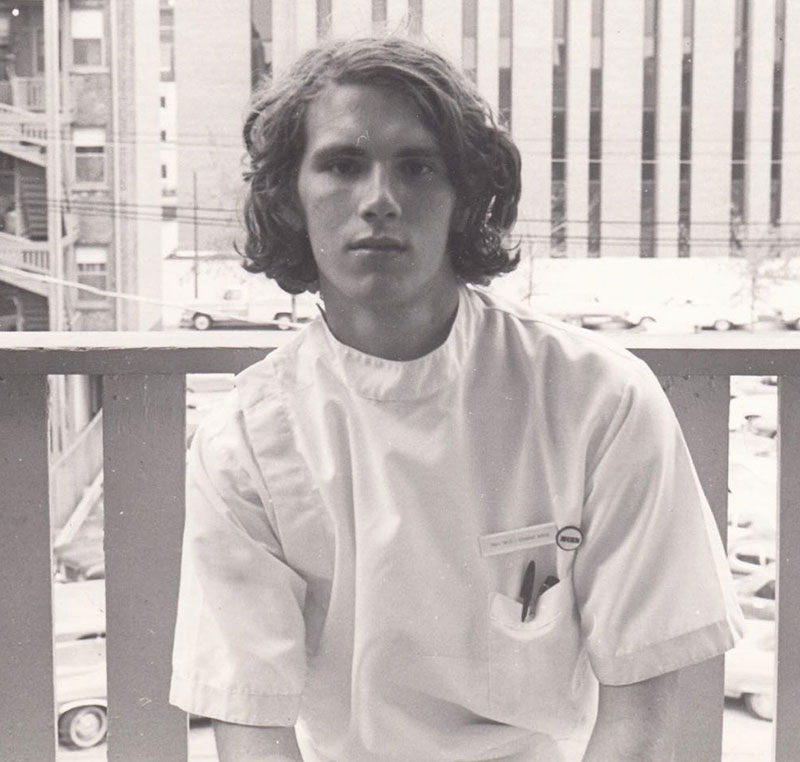
That photo of Paul in his nursing uniform was taken on the back porch of our apartment on the 3rd floor at 908 Oakdale, Chicago. Paul was a senior and I was working as a staff nurse in the operating room. The Stone Pavillion in the background was under construction. Paul, wisely, did not follow my advice to come and work in the OR-he had bigger fish to fry.
Paul was a man who stuck to his guns no matter what. When Paul was a senior at Illinois Masonic School of Nursing, I had a hot tip for him. Money was always tight back in the student nurse days so I told Paul to meet with Dr. Webster who was a prominent trustee on the hospital governing board. Dr. Webster had a tradition of paying the senior year tuition in full if you kissed up to him during the interview. It was a matter of $700, a huge amount back in the day. Paul came back from the interview with mixed news. Dr. Webster agreed to pay for his tuition IF (it was a big IF to Paul) he would get his hair cut to a short length. I went overboard and sported a near crew cut to my interview and marched out of his office with a check. Paul decided to keep his hair as it was and scrounge by sans the funding. Totally shocked me at the time, but that was Paul!
When I was working at Montrose beach, for amusement, I would sometimes swim out past the pier so the beach would look so very tiny off in the distance. Paul joined me for one of my long distance swims and we were out quite a distance when I started having severe cramps in one of my legs. Maybe it was the cold water, I never had that problem before. Paul knew exactly what to do. He said float on your back and I’ll massage it out. After about 5 minutes of Paul’s massage, the cramps were gone. I was really starting to panic, but Paul rubbing my leg like a madman with that goofy smile of his cured every thing.
Paul and I went on numerous camping trips to Governor Dodge State Park in SW Wisconsin. Paul always brought along a coleman stove and could cook up the most delicious fireside meals. Most dishes had a permutation of eggs of one kind or another. His cheese omlets were to die for. I was mainly into subsistence cookery and relied on things like hot dogs, burgers, and fish sticks. Paul asked me a couple of times to write a column for VT. He wanted to title it The Carnivores Corner. I should have listened to Paul
Paul Obis RN – A Pioneering Nurse Influencer
Every young nurse graduates from training school with high minded dreams to heal the world, but after a couple of years at the bedside the dream begins to fade as burnout sets in. No matter what you do to get around it, sooner or later, it’s going to set in like the darkness of night. An often times rigid and authoritarian hospital environment quashes outside the box thinking and innovation. I was fortunate to attend school and work with a nurse that could see beyond the bedside and promote health and wellness on a more global scale. We were good friends even though our paths diverged as I stubbornly clung to bedside nursing and he moved on to a more grand vision.
Paul Obis entered nursing school a year after me. He was a slightly built young man with an engaging personality and shoulder length hair. The hair issue was a big deal in nursing school and addressed frequently at uniform inspections. Hair was thought to be a source of infection and everyone on the nursing staff had to keep their hair off the collar while working in the hospital. Paul opted out of the Brilliantine butch haircut for the typical men in nursing coiffure and went with a pony tail to keep his locks off the collar. What worked for the girls worked for the guys.
Every student nurse has a shocking epiphany early on in nursing school, for me it was how much patients suffered. For Paul, was how terrible hospital food choices were for recovering patients. In the early 1970s the ideal meal was a huge chunk of meat surrounded by something deep fried. The notion of “healthy food” was decades in the future. When someone heard that artificial ingredients and colors were a big component of their diet, the line of thinking was; those clever scientists are at it again. What will they think of next?
Nutition classes in the early 1970s nursing programs promoted notions that white bread was just as nutritious as whole grain and the ideal protein source was a big chunk of animal flesh smothered in gravy. Paul was quick to note the malnourishment present in hospital patients as diets of the time did practically nothing to promote recovery. Vascular bypasses of one variety or another were the cutting edge procedures of the era. The sad part of this miraculous new surgery was the temporary nature of the complicated fix. Patients were returning to the hospital a few years down the road with their fancy grafts occluded by the very same atherosclerotic changes that afflicted their native anatomy.
The cholesterol theory relating saturated fats to vascular disease was in it’s infancy, but this did not deter Paul who began researching and promoting vegetarian diets as a boon to good health. Vegetarians were few and far between in the early 1970s and excluding meat from a diet was viewed in a freakish light. There was no internet or social media for folks to connect so Paul started writing a little 4 page newsletter with the proud title of Vegetarian Times.
Distribution was limited to the area around the immediate hospital on Chicago’s North Side. By Vegetarian Times Issue No. 3 the newsletter circulated to areas that Paul could reach on his bright green Schwinn Varsity bike. The VT footprint gradually grew to the point where I let Paul deliver them in my brand new Ford Pinto. Paul christened the little Runabout as the Vegetarian Times Staff Car. A “LOVE ANIMALS -DON’T EAT THEM” bumper sticker was proudly displayed which got me bemused looks in the Burger King parking lot. I was a blatant carnivore and never really adopted the meatless life.
Vegetarian Times evolved into a full scale magazine and by 1990 Paul had a media blockbuster on his hands. He worked from an office in Oak Park with a staff of 25 producing the monthly magazine. When I saw the magazine for sale in the gift shop at the hospital where I worked in Pittsburgh, I came to realize the publication had journeyed full circle back to a hospital.
Yep, That’s me endorsing VT. It’s a good thing that
scrub nurse thing worked out. I was an awful model!
When we were young nurses it seemed as though time was giving us more and more. I now realize it can take everything away too. Sadly, Paul died of Lewey Body dementia last June His memorial website of a life well lived is: http://paulobis.com/
We had Vegetarian Times at the OP Library when I worked there in high school. I had no idea its offices were in OP.
Thank you for sharing. I do read the Vegetarian Times, enjoyed the history of Mr Obis behind it.
R.I.P.
When you click on this link, you will find a wonderful story with some very interesting quotes. What a great contribution he made! I wish I had known him!
I didn’t know the background of the Veg Times magazine. I’ve seen it but the origins had not known about. Sad about the founder’s passing! I also did not know he was a nurse. I went thru nursing school in the early 70s as well. They had stuff in “diet and nutrition” that we learned back then that is no longer advised by dieticians or physicians. (Nurses cannot “prescribe”, though I think now the “Nurse Practitioners” are legally allowed to do so under the physicians’ supervision.)
Paul and I did write a couple of things together. We wrote an article about an Illinois referendum that set aside tax money for preserving natural spaces. It was published in Rodale’s Environmental Action Bulletin. Paul insisted that my name go first in the byline. I was impressed that something we wrote during a weekend of drinking beer paid as much as working for a week as a nurse. For some reason I never had the gumption to leave the cocoon of nursing. I liked it (most of the time) and it did provide a steady income that provided just about everything I needed.
Paul’s first job as a staff nurse after his Dec. 1973 graduation was in surgical ICU. The W. Clement Stone Pavilion at IMMC had just opened with brand new ORs and ICU suites. Paul and I both had quite a time comparing notes on all the SNAFUs that cropped up. Paul came home from work one night with a bump on the back of his head that was caused by a collision with one of the fancy new, untested overhead IV racks and there were endless problems in the OR. It was fun to compare notes.
The surgical ICUs were right next to the ORs so just about any major case went directly from the OR to ICU, completely bypassing a stay in the recovery room.
Paul working so close by gave me new insights into some of the post-op problems faced by some of our patients. I remember one patient, an older Japanese man that had undergone extensive cancer surgery that was having a rocky time recovering. I scrubbed on the near day long case and things had gone very well from a technical perspective. IT was a shock to hear how poorly he was doing.
Paul drove a cab in nursing school. He said that he loved it because he could park anywhere, always had cash, and had flexible hours.
I don’t think there would have been a Mrs. Gooch’s, Whole Foods Market, Vegetarian Restaurants, Vegetarian foods on menus, nor Vegetarian foods at Fast Foods Nnw if it had not been for Paul Obis and his vision of Vegetarian Times and with the kind help from Fred Rogers.
Paul’s cab driving career ended rather abruptly after he was robbed at gunpoint in the Cabrini Green Housing Project on the near north side. They took his money and a Panasonic portable radio that had been a gift from Paul Sr. One of Paul’s amazing skills was the ability to parallel park any car in any space that was just a few feet longer than the car. He learned the skill while cab driving. We would be driving around looking for a place to park and I would bait Paul by saying, “Hey, there’s a space but it’s way to short.” Paul’s eyes would light up as he said. “Get out and give me the wheel. I’ll get us in there.” He never failed and never tapped bumpers. I’m still impressed!
Paul really enjoyed driving a cab until he was robbed. He suggested to me that it was really easy to get a commercial cab driver’s license in Chicago. He said the toughest part of the exam was knowing where all the touristy destinations were located. He said they asked questions like how would you get from Buckingham Fountain to Meigs Field.
One of the vocational suggestions of Paul that I heeded was becoming a beach nurse for the Chicago Park District. We interviewed together at the administration building on Mc Fetridge Drive. The lady in charge was a delightful Irish lady that spoke with a heavy brogue and she gave us a choice of locations to work. Paul worked out of a first aid trailer at Loyola Beach and I worked out of the Montrose Beach house. I think you have a photo on Paul’s Memorial site of his Mom visiting him at his aid trailer. It was a fun Summer job and I learned some new skills like how to remove imbedded fish hooks. Sometimes Paul and I would trade locations, but he seemed to like Loyola beach the best because it gave him time to work on VT.
My longtime friend, Paul Obis wrote on topics from agribusiness to energy. “He was very empathetic, interested in people’s stories and he would try to tell their stories on natural living, natural health,” Bohan said. “He was very progressive, with a capital P.”
“The more I embodied vegetarianism, the more I realized that it was not merely diet. It became a spiritual/ethical/compassionate/political/health issue. In short, it became my lifestyle. I could no longer separate my vegetarianism from other aspects of my life.”
I have been thinking of you as the anniversary of Paul leaving us approaches. I hope you are doing well. This must be a very difficult time for you. I was looking for some more vintage photos from the good old days of Paul and friends and came across one lighthearted image.
Paul and June were having an argument about whether alcohol is a drug. No matter what I said or Paul came up with, she insisted alcohol was NOT a drug. Paul had just about enough and said, “I’ll prove that alcohol is indeed a drug.” He took a label from one of Richard’s (his roommate at the time) prescription bottles and plastered it on a bottle of beer. He took a swig from the pharmaceutically labeled bottle and said, “That should settle it!”
Such a touching image of Paul’s goodbye. You certainly gave him a wonderful and peaceful sendoff.
It was strange to see Paul in bed, because in his youth, he did not sleep very much. I worked lots of nights in the OR on call and Paul told me all the time that I was spending way too much time in bed. It seemed like I was either working or sleeping-not much of a life. Paul usually got up early in the morning and you could hear him banging away on his little blue manual typewriter. It was the same story in the evening – Paul typing away.
There was a locally produced show done by a Chicago TV station, I think it might have been WGN. Paul communicated with the host, Bob Smith, (Yep that was his real name!) Anyhow the TV station wanted to do a feature on a vegetarian pot luck supper Paul was hosting in our Oakdale apartment. These were the days before video tape and the show was done on 16mm film. The lighting, batteries, relay boxes, and cameras occupied the entire landing outside the apartment. It was quite a production.
Paul, encouraged by his local success, wrote Johnny Carson and proposed a segment for his show where he taught CPR on a mannequin, Resci-Annie. We never heard back from Johnny, but Paul plodded on getting the vegetarian message out there.
I’m a very old friend of Paul from IMMC School of nursing. I taught Paul how to drive a car with a manual transmission and he taught me how to parallel park. We once drove from the Grand Canyon in Az to Illinois NON STOP. What an experience.
Paul could strike up a conversation and make friends with anyone, anywhere. A very special person who will be deeply missed.
Paul’s ways were different from anyone else I ever knew and had a way of sticking with you. He had a special and unique perspective on just about everything. I hope your grief heals with the passage of time. I know if something was bothering me or getting me down Paul would always do something on the silly side to raise my spirits. I know how badly Paul would feel if anyone was suffering and he would want you to be happy again.
Here is another “Paul” story. I always drove a car with a manual transmission and Paul only had experience with automatics. He did not seem real enthused with my offer to teach him how to drive a 4 speed so I sweetened the pot by telling he could use my Pinto as a VT staff car, but first he had to learn how to shift gears.
We tried driving and he kept popping the clutch and killing the engine. I think he may have had a bad learning experience with Paul Sr. I finally figured that the best way for Paul to relax would be to practice with the car parked-not running. We sat in the parked car and practiced for some time until Paul felt ready.
He was a shifting fool after that and took to it like a duck to water. The only time Paul forgot to disengage the transmission was at toll booths. When I was resting, with Paul at the wheel, I always knew when we came to a toll booth by Paul’s cussing and the car bucking.
We would sometimes go on camping trips after I worked nights and Paul would drive. Toll booths always woke me up!
“For three or four years writing the magazine was a labor of love,” he says. The magazine was printed at Salsedo Press on the near west side. “I didn’t have a car. I’d ride my bike down from Rogers Park, give them the boards [from which the magazine would be printed], and pick up the copies a week or so later.
“I would actually take the boxes of magazines–an entire press run of 1,000 or 2,000 copies–one on the handlebars, one on the rear, and a big backpack for the rest.” He muscled them back to Rogers Park, where he would stay up all night mailing them out. The seemingly perpetual shortage of nurses enabled him to work for a nursing agency, “so I could call them up and set my own hours for when I wanted to work
The sudden onset of cold weather here in Pittsburgh got me to reminiscing about a few of the winter camping trips Paul and I went on during the Mid 1970s.
The frigid winds would be howling outside our apartment which was just 8 blocks west of the lake and Paul would get that look in his eye. “What do you think about a winter camping trip?” he would ask. I could se those little wheels turning in his head.
I borrowed a heavy duty, 4 season tent from my dad and we would head off to nearby campgrounds like the one in Zion, Ill. We figured that if it got too bad we could take refuge back to Chicago.
We got a little more brave as we gained experience. Our ultimate Valley Forge experience was at Governor Dodge State Park in SW Wisconsin. We thought that since it was the beginning of March the weather would moderate. We were wrong. As we huddled in the tent afraid to get out of our sleeping bags a heavy snow fell. It took a full 2 days before the park personnel plowed a way back out.
Luckily we had an abundance of dry firewood and kept an inferno going the entire time. Paul liked to imagine the glowing embers were little cities rising up and then fading away. We told each other so many stories and consumed lots of beer. Paul always brought a Coleman stove and could make the best grilled cheese sandwiches I’ve ever had. We had no worries about starving!
I’ve been reading about Paul, he made a big difference in many lives. He was a go getter for sure and believed in what he did. I wish I had known him.
Paul wore his hair long during the 70’s. When he was addressed Ma’am by a patient. He said he left the hospital that day and went straight to the barber. He was a character.
I love reading about Paul, and how you honor him. ❤️
IT was the Fall of 1971 and Paul had just entered nursing school. I was just getting ready to begin my Junior year of nursing school and had started working part time in the OR. The Viet Nam war was really starting to accelerate and a lottery was initiated by Selective Service using birthdates as the determining factor. 365 balls with every day of the year were tumbled in a large glass vessel and we were called to report in order of the draw of our birthdays.
Paul and I were both unlucky with my birthday being drawn in the number 22 spot and Paul’s a few slots before mine. We received our order to report to The Armed Forces Exam center in the same week.
We each came up with different strategies to stay in nursing school. I had high blood pressure and stopped taking my Aldomet a few days before the exam. when I reported for the physical my blood pressure was sky high and after flunking two exams I was granted a 4F deferment.
Paul had other ideas. He applied to be a conscientious objector and had to have testimony supporting his beliefs. He began studying Hinduism and the non violent teachings of this faith to abstain from eating meat. I think he went to one hearing and got a continuance and was told by another draftee to just keep showing up and asking for another hearing.
I think it was around this time after Paul had stopped eating meat for a few months that the notion to start VT struck him and he wanted to share the health benefits of abstaining from meat. Paul never got an official C.O. status from selective service but by the time he was finished with contiuances and appeals the war had spiraled down and VT was well on it’s way.
Paul worked hard. I sure appreciate all his hard work. It wasn’t easy back them being a vegi.
Paul was up North visiting Us. Most of the time he just dropped in 500 miles, lol. We were having pork etc for supper. I offered to make him something else, he said no. He even had seconds. Many great times back in Chicago, college days.
I enjoy reading about Paul Obis.
Who knew Van Kamps beans could be life changing! What an intersting story. Thank you for sharing it. He sounds like an amazing guy. I’m so sorry for your loss.
Thank you for your interesting story about your special partner in life, I am so happy that you found your soulmate, and it is heartbreaking that you now have to live without him, but, as long as your memories last he will never be forgotten.
Good for Paul. He has my respect and gratitude
He had movie-star good looks.
Paul drove a cab in college. He was in South Chicago with a passenger -who started shutting all of the windows because of fear. Paul said “if you were to go into one of those stores the person behind the counter would say “many I help you just like any other store”. I love that a story because he believed in people. He saw the goodness and compassion – and diid not judge. I was so proud of being this wife. #paulobis #vegetariantimes #lewybodydememntia. http://www.paulobis.com
Ray Kroc, founder of McDonald’s said to Paul Obis, founder of Vegetarian Times: I have 40 cows.. they’re not for meat. I can see you believe in what you’re doing.. it’s important to believe in what you’re doing. I think you’ll do alright.
in 1975. In 1974, philosopher Thomas Nagel (1936–) publishes “What Is It Like to Be a Bat?”— raising the question of whether and how we might know animal consciousness. Feminist scholar Carol J. Adams (1951–), a young master’s student at Yale Divinity School, makes the connection between feminism and vegetarianism that will lead eventually to the publication of The Sexual Politics of Meat. And the North American Vegetarian Society is founded—partly to prepare to welcome attendees from around the world to the World Vegetarian Congress in Orono, Maine, in 1975.
It is within this fermenting context that two young people encapsulate and galvanize the spirit of the times. In 1974, Mollie Katzen (1950–) in Ithaca, New York, will staple-bind and self-publish the recipes she’s developed from her restaurant into the legendary Moosewood Cookbook. And, the young visionary nurse, Paul Obis, will fold and gather his own recipes and writings, pile them onto his bike, and ride (precariously) around Chicago, delivering the issues to friends and a rapidly growing collection of readers. Marking the beginning of his Vegetarian Times.
While he was in nursing school and working summers at Montrose Beach as a lifeguard, Obis had time to do some writing on Vegetarianism in addition to his nursing, getting his work published in the Chicago Seed, Chicago Express, and the Triad Radio Guide. For the early Reader he parodied the pseudo-mysticism of Carlos Castaneda’s Don Juan books and offered a first-person vignette in the life of a caffeine addict. But when he came up with a story close to his heart–“Being a Vegetarian Is Never Having to Say You’re Sorry–to a Cow”–neither the Reader nor the Express was interested.
Paul Obis, the founder of Vegetarian Times, was interviewed by the Chicago Reader about his magazine and his decision to give up meat:
Inspiration
Obis told the Reader that he was inspired to stop eating meat after asking himself how many cows he would eat in his lifetime while eating at a Burger King in Chicago in 1970.
Tone
Obis said that he didn’t want to enforce his views on the world, and that the magazine was more like the Catholic Church than Jehovah’s Witnesses.
Content
Obis said that the magazine’s success was partly due to its practical information, such as guides to vegetarian restaurants.
Interviews
The magazine featured interviews with famous vegetarians, including Mister Rogers, Michael Jackson, Annie Lennox, Madonna, Linda McCartney, and more.
Gym suit issue
In response to Sports Illustrated’s swimsuit issue, Vegetarian Times offered a gym suit issue featuring readers in exercise gear.
Obis started Vegetarian Times in 1974 as a newsletter that he hand-delivered by bicycle. He eventually sold an 80% ownership share to Associated Business Publications (ABP) in the early 1980s.
By Graydon MeganChicago Tribune
Paul Obis’ decision to start Vegetarian Times magazine was made as he ate a cheeseburger at Burger King.
“He looked at it and said (to himself), ‘I wonder how many cows I’m going to eat in my lifetime?’ ” said his wife, Janeen. “It just sparked him. He put it down and left. That’s the day he started the movement in his head.”
The magazine began as photocopied hand-delivered newsletter in 1974 and grew into a well-regarded monthly publication. Obis sold it and bought it back at least once in the 1980s, then sold it for the last time in the early 1990s.
“Paul was a great inspiration for all of us (vegetarians),” said Kay Stepkin, founder and president of the National Vegetarian Museum, a traveling entity based in Chicago.
“His magazine was wonderful. It was the first vegetarian magazine in modern days. It was not just recipes — it was also very political, it talked about issues in the vegetarian community. It was a thinking person’s magazine.”
Obis, 66, died June 25 in his Los Angeles home of Lewy body dementia, his wife said. He was a longtime resident of Oak Park before moving to California about a year and a half ago.
He grew up in Melrose Park and graduated from Proviso East High School. He went to the University of Illinois at Chicago and eventually decided to study nursing. His father was a pharmacist and encouraged Obis to follow his career path. But Obis went another direction, with vegetables playing a role in his choice.
“As the story goes,” his wife said, Obis was working in a food storage area when a can of beans fell on his head, knocking him unconscious. He ended up in a hospital being cared for by a nurse who told Obis what a satisfying job nursing was. By the early 1970s, Obis had shifted his studies to nursing and continued working in the field even after starting Vegetarian Times.
Obis had started a couple of small publications, including a pamphlet on celebrity vegetarians, before launching Vegetarian Times from his apartment in Oak Park, said his son Nicholas.
It was a family affair, with Obis’ first wife, Mariclare Barrett, writing columns, recipes and book reviews. Obis wrote a variety of pieces for the publication, occasionally using different versions of his name and changing his titles from issue to issue.
Peter Bohan, a longtime friend, said Obis wrote on topics from agribusiness to energy. “He was very empathetic, interested in people’s stories, and he would try to tell their stories on natural living, natural health,” Bohan said. “He was very progressive, with a capital P.”
In the early 1980s, Nicholas Obis said his father sold the magazine, only to buy it back some time later. That set the stage for a celebrity vegetarian to get involved.
Obis had interviewed Fred Rogers of “Mister Rogers’ Neighborhood” for a November 1983 cover story. Rogers and Obis became close friends and Rogers was godfather to one of Obis’ sons.
“My understanding is that dad sold the magazine around (1984),” Nicholas Obis said in an email, “then bought it back in 1985, with Fred Rogers as an investor, though quietly.”
Obis sold the magazine again in the early 1990s. He did some consulting for other publishers, his son said, and had ideas for several other publications, but none ever got off the ground.
After a long time away from nursing, he returned to North Park University in Chicago to refresh his skills and returned to nursing around 2011, his son said.
He continued to nurse until about 2014, when he was diagnosed with Lewy body dementia.
Obis returned to at least occasionally eating meat after a serious accident left Barrett unable to cook. Neighbors and friends brought food to the family and Obis concluded it was better to eat the occasional meat dish than to waste the food or rudely decline the offerings.
Stepkin said people come to vegetarianism for reasons that include better health, caring for animals, environmental concerns or even spiritual reasons. Obis, she said, addressed all those issues in Vegetarian Times.
“It had a very big impact on our movement,” she said.
Obis was divorced from Barrett, who died in 2015.
In addition to his wife and son, survivors include five other sons, Quentin, Paul, Kevin, Timothy and Gregory; and one grandchild.
r.
While Angela Davis is well known for her progressive perspectives on race, gender, and class, less well known are her views on species, which are quite forward-thinking. The great socialist scholar, it might surprise some to hear, does not consume animal products.
“I usually don’t mention that I’m vegan but that has evolved,” Davis said at the 27th Empowering Women of Color Conference, according to a transcript available at RadioProject.org. “I think it’s the right moment to talk about it because it is part of a revolutionary perspective – how can we not only discover more compassionate relations with human beings but how can we develop compassionate relations with the other creatures with whom we share this planet and that would mean challenging the whole capitalist industrial form of food production.”
Challenging this form of food production, Davis said, would involve witnessing animal exploitation firsthand. “It would mean being aware – driving up the interstates or driving down the 5, driving down to LA, seeing all the cows on the ranches,” she stated. “Most of people don’t think about the fact they’re eating animals. When they’re eating a steak or eating chicken, most people don’t think about the tremendous suffering that those animals endure simply to become food products to be consumed by human beings.”
For Davis, this blindness is connected to the commodity form. “I think the lack of critical engagement with the food that we eat demonstrates the extent to which the commodity form has become the primary way in which we perceive the world,” she said. “We don’t go further than what Marx called the exchange value of the actual object- we don’t think about the relations that that object embodies- and were important to the production of that object, whether it’s our food or our clothes or our iPads or all the materials we use to acquire an education at an institution like this. That would really be revolutionary to develop a habit of imagining the human relations and non-human relations behind all of the objects that constitute our environment.”
Davis struck a similar note in a video recording uploaded to the Vegans of Color blog.
“I don’t talk about this a lot but I’m going to do this today because I think it’s really important,” she said. “The food we eat masks so much cruelty. The fact that we can sit down and eat a piece of chicken without thinking about the horrendous conditions under which chickens are industrially bred in this country is a sign of the dangers of capitalism, how capitalism has colonized our minds. The fact that we look no further than the commodity itself, the fact that we refuse to understand the relationships that underly the commodities that we use on a daily basis. And so food is like that.”
Davis suggested viewers watch the film ‘Food, Inc.’ “And then ask yourself,” she said, “what is it like to sit down and eat that food that is generated only for the purposes of profit and creates so much suffering?”
Davis concluded her comments by explicitly linking the treatment of humans and animals.
“I think there is a connection between, and I can’t go further than this, the way we treat animals and the way we treat people who are at the bottom of the hierarchy,” She said. “Look at the ways in which people who commit such violence on other human beings have often learned how to enjoy that by enacting violence on animals. So there are a lot of ways we can talk about this.”
We had a new typesetting partner in sight, our across the hall neighbor, Vegetarian Times magazine. Run by Oak Parkers PaulObis, VT was less radical but more far out. Like the Journal, Vegetarian Times was journalism with a mission. While we wanted to create an urban utopia in our hometown, the magazine was mixing politics and nutrition into a healthy lifestyle brew.
“Never ever doubt that a small group of thoughtful citizens can change the world. Indeed, it is the only thing that ever has.
Because while vegetarians are a great, vital, passionate niche, their healthy way of eating and the earth-friendly values it inspires appeals to an increasingly large group of Americans. VT’s goal: To embrace both.
Janeen called her husband a provider and a force for humanity. She said he was forward thinking, creative and intellectually energetic. He was, she said, brilliant, eccentric, a sweet gentle soul and a humanitarian.
Those are apt words to describe the man I knew so many years ago. A conversation with Paul would go on for a long while and in many unexpected directions. But it was always interesting.
Peter Bohan, a longtime friend, said Obis wrote on topics from agribusiness to energy. “He was very empathetic, interested in people’s stories, and he would try to tell their stories on natural living, natural health,” Bohan said. “He was very progressive, with a capital P.”
In MY “expansive mind” I was trying to blow this out of all proportions into a proportions of ALL, that would make the platforming vision of “Vegetarian Times” great again so that it would (a) go beyond Paul Obis, (b) but honor him as a visionary founder, a dedicated “servant of visiont”, and a catalyst for something far greater that we need to develop, build, catalyze, and implement in order to show how GREAT that vision IS and was.
Ethics on the Menu
Sometimes, the reasons why we do something can be more important
than what we actually do. I mention this because as a vegetarian I find
that my motives, more than my actions, are what most interest other people.
Fortunately, not eating meat is now acceptable — even chic — in most
circles. But when I am asked why I’m a vegetarian, I sometimes get into
dangerous social territory.
It’s okay not to eat meat if you’re losing weight or trying to keep your
cholesterol levels low, but when you start getting into things like the rights
of animals, world hunger issues, saving the rainforests or anything else that
smacks of personal ethics, it’s almost like talking about religion and
politics at the same time. It doesn’t even matter how accepting you may be
about the other person’s views or lifestyle.
This is an unfortunate commentary on our times because, historically,
much of the motivation for vegetarianism has been moral. Indeed, the
relationship between diet and ethics goes back to the book of Genesis, and
arguments in favor of vegetarianism have been advanced ever since.
Each of us has decided for ourself whether or not to adopt a vegetarian
diet, and if so, to what degree. We determine our individual moral values
based upon our family, friends, religion, education and experience.
Vegetarianism is fundamental to my life philosophy. To some people, my
refusal to eat chicken broth seems absurd; yet to my vegan friends, the fact
that I enjoy a dish of ice cream may seem the height of hedonistic
debauchery. Ultimately, these are very private decisions, and we arrive at
our answers only after some personal consideration. What is fundamentally
important, however, is to examine the issues when asking the questions.
This month, we depart a bit from food and recipes by presenting three
ethically related articles. “Biomachines,” by Wayne Pacelle, takes a frank
look at the lives of animals on America’s corporate farms. Although we
often touch upon factory farming in our news section, this is our first full-
length article that deals with the whole topic.
A concern for animals leads many vegetarians to a vegan diet, one that
excludes all dairy products and eggs in addition to meat, fish and chicken.
Why such a seemingly extreme, almost un-American choice? Noted author
Victoria Moran presents the rationale in her article, “Veganism.”
Finally, there’s the leather question. If you don’t eat meat, should you
also eschew footwear or clothing that comes from animals? Lucy Moll
presents some information in “A Humane Pair of Shoes” that could
challenge your usual choices.
Choice, in fact, is what this issue is about. It’s meant to stretch your
vision, not to proselytize or conjure up guilt. We respect every step a
person takes on the road to vegetarianism. To make your decisions, though,
we believe you want to see not only the main highways but also the roads
less traveled.
finally had an opportunity to visit The Farm, a vegetarian community in rural Southern Tennessee. Some of you may be familiar with The Farm Vegetarian Cookbook or Tofu Cookery, two of the many vegetarian books published by The Book Publishing Company located on The Farm. Others may have eaten Ice Bean, one of the first soy ice creams to appear in health food stores. Ice Bean was first produced on The Farm in its Soy Dairy and later bought out by a larger company. And some readers may know that The Farm is in the forefront of advocating home births and the use of midwives, promoting Native American rights, developing solar energy technology, and even encouraging poor farmers to grow Shitake mushrooms. These activities and many more are occurring on The Farm today.
Situated on over 1,700 acres in Summertown, Tennessee, The Farm is home to many vegetarian families. The community first formed in 1971 as a commune. Several hundred “hippies” boarded old school buses in California and made the trek to rural Tennessee. Originally their plan was to live off the land; however, few of them had any real farming experience (many had grown up in cities) and they soon realized that they did not know how to survive off the land. In fact, today there are a small orchard and vineyard and many large organic gardens maintained by families, but there is no large-scale organic farming.
The Farm Today – A Model Community
The F arm Community Solar School
The Solar School
The Farm continues to serve as a model for a way in which humans can live together in peace.
It continues to keep the principles of nonviolence as its core foundation.
Respect for the environment and living lightly on the earth continues to be a common thread uniting all members.
The Farm Ecovillage Training Center
The Ecovillage Training Center
Education and outreach as a way to influence the world at-large remain a priority, exemplified through its many different interrelated projects and organizations.
Like anything created by humans, The Farm is not perfect, as its members readily admit.
Rather, it is the community’s ability to evolve and change, adapt and survive through both good times and hard times, that allow it to serve as a realistic model.
The Farm Community Swan Conservation Trust
Swan Conservation Trust
Currently The Farm Community, related organizations and affiliated individuals own and control over 4000 contiguous acres.
With thousands of acres of hardwood forest surrounding the community being clear-cut in recent years, these ecosystems stand as an island for countless species and protects the watershed for future generations.
By living together in community, individuals gain greater leverage in the pursuit of their ideals.
PeaceRoots Alliance
These ideals are passed from one generation to the next through example and collective participation in a variety of efforts that possess a single common purpose: to make a positive difference in the world.
Ultimately it is the ability to pass on core ideals to a future generations that defines sustainability for the community.
So what is the country’s top (and almost only) vegetarian publication doing in Oak Park? In large part it’s here because its founder is a Chicagoan. But that accident, Obis believes, is one of the magazine’s strengths. “Fads start on the coasts. Midwesterners are more pragmatic and conservative–less likely to jump on the next hemline.”
In the same vein, Obis has described vegetarians as “very mainstream people.” Since I had always thought of “No meat, please” as a step out of the American mainstream, I asked what he meant.
“Oh, I suppose, they have kids and have a mortgage. Many different people constitute the mainstream.”
You mean, there are a lot of people in the mainstream that you might not have expected to be there?
So what is the country’s top (and almost only) vegetarian publication doing in Oak Park? In large part it’s here because its founder is a Chicagoan. But that accident, Obis believes, is one of the magazine’s strengths. “Fads start on the coasts. Midwesterners are more pragmatic and conservative–less likely to jump on the next hemline.”
In the same vein, Obis has described vegetarians as “very mainstream people.” Since I had always thought of “No meat, please” as a step out of the American mainstream, I asked what he meant.
“Oh, I suppose, they have kids and have a mortgage. Many different people constitute the mainstream.”
You mean, there are a lot of people in the mainstream that you might not have expected to be there?
“Yes. I never expected to be there.”
“We did a whole bunch of this stuff on purpose, set out to do a thing and do it right and all that. And it’s still happening, and what we’re doing is we’re making the assumption that people everywhere like the same things, that we all really are all one, and that nobody’s such a stranger that he’s going to have radically different ideas of what he likes. So we’re saying that most people are going to like the same kind of things we like, and what do we like? Peace? and quiet, something to do that means something, a chance to grow, a chance to do something.”
Everyone on “The Farm” followed Stephen Gaskin as their personal spiritual teacher. He taught his members how to improve their lives by being peaceful and honest in all aspects in life, especially in food choices. This example shows the goals of the counter culture movement lining up nicely with the beliefs of veganism. In a report published by “The Farm” in 1971, Stephen Gaskin talked about his motives behind setting up “The Farm” and leading the group. He said…
…We did a whole bunch of this stuff on purpose, set out to do a thing and do it right and all that. And it’s still happening, and what we’re doing is we’re making the assumption that people everywhere like the same things, that we all really are all one, and that nobody’s such a stranger that he’s going to have radically different ideas of what he likes. So we’re saying that most people are going to like the same kind of things we like, and what do we like? Peace? and quiet, something to do that means something, a chance to grow, a chance to do something.”
I will always remember how Paul could coax Mcdonalds fast food workers to prepare him a vegetarian meal and probably convert a few of them to vegetarianism. I’m enclosing some photos of VT delivery vehicles. Paul started out with his bicycle, but switched to my motorcycle as the magazine grew. Note the Love animals don’t eat them bumper sticker on my Honda. Paul loved camping adventures and we would transport the VT issues in an old metal Coleman cooler lashed to the bike’s luggage rack. I then bought a 1974 ford Pinto we dubbed it the VT staff car and plastered the rear bumper with pro vegetarian messages.
The early years of VT were a real challenge for Paul as he was several thousand dollars in the hole by 1975. One really critical event strengthened Paul’s resolve to persist with the magazine no matter what. I was working at Downey VA Hospital (lots of downey tales on my blog; Oldfoolrn.blogspot.com.) Paul wanted to see the ward at Downey where I worked and it was really an old school madhouse with lots of screaming with someone always in full leather restraints. Paul repeatedly asked me how I could stand the place and he said he had to make a success of VT because he could never work as a nurse in a place like that.
I would be happy to speak with the producer of the documentary. Paul could have never imagined something like that. The photo of Paul with his friend Norm and June is the quintessential Paul. Paul had a collection of the KEEP ON TRUCKIN character emblazoned T shirts that he wore with cut off shorts just about everywhere.
The Veggie Cook
We’ve come a long way
By Kay Stepkin
It was quite a heady experience when I opened the Bread Shop in 1971. There was no other vegetarian business in town yet and so creating a whole grain bakery with an adjacent vegetarian grocery store — with my borrowed $1,000 — was beyond exhilarating. It was my first step toward saving our planet.
I remember Paul Obis, one of my customers, walking into the back area one day, where I was busy chopping away at something or other. He handed me a double-sided typed sheet of paper and informed me that it was a copy of his new magazine, Vegetarian Times. I loved it and read it to this day.
The magazine celebrated its 400th issue in 2013 and Paul told me that he’s quite proud that it has survived and prospered all these years. He created a legacy.
“Vegetarianism: Growing Way of Life, Especially Among the Young,” published in 1975, and “A family pursues economics, health and compassion by joining the new vegetarians,” published in 1974.”
BEGINNINGS
In the mid 1970`s the vegetarian movement was only a pale shadow of what it is today; tremendous changes have occurred since that time. In 1975, the bi-annual World Vegetarian Congress was held in Orono, Maine. It proved to be a turning point, because for the first time in the United States, almost 1500 vegetarians got together and began to form alliances.
Paul Obis started publishing Vegetarian Times in 1974. He began by distributing 300 copies of a 4-page typewritten free handout at Chicago-area health food stores. From his original $17 investment the magazine has steadily grown until today its circulation is about 350,000. Their special “Sweet 16 Issue” (December, 1990; Issue 160) gives many details about vegetarian events and personalities.
At the conference at Orono, Victoria Moran, a vegetarian since 1969 and a contributor of articles to publications such as Well Being and Vegetarian World, met Paul Obis, who asked her to write for Vegetarian Times . Since then Ms. Moran has been contributing articles to that publication and other vegetarian and animal rights publications. Later she became a vegan, and wrote a comprehensive book on veganism, Compassion – The Ultimate Ethic (1985) She frequently speaks on various aspects of this diet, and she recently wrote The Love Powered Diet – When Willpower Isnt Enough (1992) to show people how to move toward a healthier way of eating. #paulobis #victoriamoran #vegetariantimes #lewybodydementia. http://www.paulobis.com
Paul Obis founded Vegetarian Times magazine in 1974. While he wrote for the magazine and possibly other publications in 1975, finding a specific list of editorials from that year is difficult. Information suggests he was the editor and wrote various pieces for the magazine, sometimes using different versions of his name. He was also known to write articles on a range of subjects, including agribusiness and energy.
The first issue of Vegetarian Times, launched in 1974, featured articles like “Meat and Bacteria” and “Vegetarians and Astrology,” along with a recipe for mushroom loaf. It is likely he continued this blend of health and lifestyle topics in his editorials throughout 1975
According to the Chicago Reader, for the early Reader he parodied the pseudomysticism of Carlos Castaneda’s Don Juan books and offered a first-person vignette in the life of a caffeine addict.
Obis, the writer, also wrote a first-person account of the life of a caffeine addict that was published in the Chicago Reader.
This piece was a vignette, a short, evocative literary sketch, offering a personal look at the experiences of someone with caffeine dependence.
Paul Obis wrote for the Chicago Reader in the early 1970s. He wrote on topics like agribusiness, energy, natural living, and health.
The phrase “Being a Vegetarian Is Never Having to Say You’re Sorry – to a Cow” is a humorous and memorable way to highlight the core ethical motivation for many vegetarians and vegans: the desire to avoid contributing to the exploitation and killing of animals for food.
Specifically, the phrase implies that vegetarians and vegans, by not consuming animal products, are not directly implicated in practices like factory farming, which can involve suffering and the premature death of animals like cows. It’s a play on the well-known phrase “Love means never having to say you’re sorry,” suggesting that a vegetarian or vegan diet demonstrates love and compassion for animals.
The quote is attributed to Paul Obis, the founder of Vegetarian Times magazine, who reportedly titled an article about vegetarianism with this phrase in 1974.
Paul’s writings contributed to The New Age movement which is a loosely organized, eclectic range of spiritual and religious beliefs and practices that gained prominence in the Western world during the 1970s. It’s characterized by a focus on personal transformation, holistic health, and a belief in a coming “New Age” of global unity and enlightenment.
Impact of Individual Choices: Obis linked individual actions to collective problems, such as littering. He applied the idea that “small things we do all add up into the big things,” to his decision to stop eating meat. He reasoned that widespread meat abstention would lessen the environmental burden associated with meat production.
A Child of the 60s: Obis is described as a “child of the 60s” who wanted to make a difference. This desire likely influenced his commitment to address environmental concerns through dietary choices.
Obis’ journey from eating meat to founding Vegetarian Times was driven by the understanding that individual dietary choices, when adopted by many, can significantly affect environmental problems. His vision was to empower individuals to make these choices and encourage a wider societal conversation about the impacts of food systems on the planet.
Distrust of the Establishment and Mass Production: The 1960s counterculture emphasized a rejection of mainstream values and institutions, including the industrial system that produced food. This fostered a skepticism towards mass-produced, mass-marketed foods, aligning with a growing interest in natural and organic foods. Obis’ advocacy for vegetarianism could be seen as a challenge to the prevalent meat-centric food system, which was intrinsically linked to industrial agriculture and its environmental consequences.
Emphasis on Connection to Nature and the Environment: The counterculture promoted a sense of harmony with nature and a desire for simpler, more sustainable ways of living. Environmental issues like pollution and resource depletion were gaining prominence during this time, partly fueled by influential books like Rachel Carson’s “Silent Spring”. This resonated with Obis, who, as mentioned earlier, was driven by a concern for the cumulative impact of human actions on the environment. His embrace of vegetarianism was a personal way to “give Earth a chance,” as a popular slogan of the time suggested.
A Desire to “Make a Difference”: The “child of the 60s” identity often carried with it a strong desire to bring about positive change in the world. Obis’ founding of Vegetarian Times was a direct manifestation of this impulse. He saw the potential for vegetarianism to be a force for good, addressing not only individual health but also broader societal issues like animal welfare and environmental sustainability. The magazine provided a platform to disseminate information and promote these ideas to a wider audience, reflecting the era’s focus on consciousness-raising and grassroots movements.
Exploring Alternative Lifestyles and Self-Expression: The counterculture encouraged experimentation with alternative lifestyles and a questioning of traditional norms. For many, food choices became a way to express their values and identities. Vegetarianism, which was seen as unconventional and even “weird” at the time, fit within this framework of challenging the status quo and embracing alternative ways of living. This provided fertile ground for Obis’ efforts to popularize vegetarianism and make it more accessible.
In essence, Paul Obis’ “child of the 60s” identity provided him with a lens through which to view the world, instilling in him a sense of environmental awareness, a desire for social change, and an openness to alternative lifestyles that significantly influenced his dedication to promoting vegetarianism.
Key environmental themes integrated into Vegetarian Times
Critiques of Industrial Agriculture and its Impact: The magazine highlighted the negative consequences of industrial animal agriculture, echoing concerns raised by the broader environmental movement about the overuse of resources and the pollution generated by large-scale production methods. This included:
Pollution: Articles addressed the pollution of waterways from animal waste and the impact on aquatic life.
Resource depletion: The inefficient use of water for animal feed was a consistent theme, alongside concerns about deforestation and land degradation.
Emphasis on Sustainable Living and Conscious Consumption: Vegetarian Times promoted vegetarianism as a way to engage in a more sustainable lifestyle, aligning with the 1960s counterculture’s interest in natural foods, self-sufficiency, and reducing one’s ecological footprint. The magazine featured recipes and tips for eating and living in ways that minimized environmental harm.
The Link Between Diet and Global Issues: The environmental issues of the 1960s, like climate change (though perhaps not yet labeled as such) and resource scarcity, laid the groundwork for understanding the larger picture of how food choices contributed to these problems. The magazine explored themes related to global food security and the impact of meat production on the world’s ability to feed a growing population.
Drawing on the Spirit of Advocacy and Activism: The decade saw a growing sense of urgency and activism around environmental concerns, culminating in events like the first Earth Day in 1970. This spirit of advocacy permeated the magazine’s content, empowering readers to make a difference through their dietary choices and to engage in broader environmental discussions. Obis’s own motivation for giving up meat was linked to the idea that individual actions, however small, could collectively contribute to larger-scale problems and thus, could also contribute to solutions.
Essentially, Obis used Vegetarian Times to translate the abstract concepts of 1960s environmentalism into concrete dietary practices, making the connection between personal food choices and environmental stewardship tangible and accessible to his readers.
Initially pursuing chemistry at the University of Illinois at Chicago, Obis changed his career path after an incident at a commissary where a falling can of beans knocked him unconscious. While recovering in the hospital, a nurse shared their satisfaction with the profession, inspiring Obis to shift his studies to nursing.
He continued to work as a nurse even after founding Vegetarian Times in 1974. After selling the magazine in the early 1990s, Obis eventually returned to nursing in 2011 after refreshing his skills at North Park University. He continued to work as a nurse until 2014, when he was diagnosed with Lewy body dementia.
AI responses may include mistakes. Learn more
Why did Paul Obis return to nursing after selling Vegetarian Times?
According to his son, Paul Obis returned to nursing around 2011, after a long time away from the profession. Although the exact motivations aren’t detailed, he had previously pursued other ventures after selling Vegetarian Times in the early 1990s, including consulting for publishers and developing ideas for other publications, though none of these ultimately materialized. He refreshed his skills at North Park University before returning to nursing. It’s worth noting that his son mentioned Obis was a “provider” who was happier giving than receiving and had cared for ailing family members, suggesting a compassionate and service-oriented nature that might have contributed to his desire to return to nursing.
AI responses may include mistakes. Learn more
Was there a specific event that triggered his return to nursing?
There doesn’t appear to be a single, specific event cited as the trigger for Paul Obis’s return to nursing around 2011. His son mentioned that he had explored other publishing ideas after selling Vegetarian Times in the early 1990s, but these didn’t materialize. His return to North Park University to refresh his skills indicates a deliberate choice to re-engage with the profession after a period away.
It’s suggested that his compassionate nature, having cared for ailing family members, might have played a role in his motivation to return to a service-oriented field like nursing. It’s also worth remembering that he was a nurse before founding Vegetarian Times, so it was a familiar path to return to.
AI responses may include mistakes. Learn more
What other ventures did Paul Obis pursue after Vegetarian Times?
After selling Vegetarian Times in the early 1990s, Paul Obis explored other ventures, including consulting for other publishers. His son mentioned that he also had ideas for several other publications, but none of these ever came to fruition. He then returned to nursing in 2011, after a long period away from the profession.
AI responses may include mistakes. Learn more
How did Paul Obis’s nursing background influence Vegetarian Times?
Paul Obis’s background as a nurse undoubtedly influenced the content and mission of Vegetarian Times. While the magazine initially focused on general aspects of vegetarianism, including animal ethics and environmental concerns, his nursing experience likely shaped the publication’s emphasis on health and nutrition.
Here are some ways his background might have influenced Vegetarian Times:
Focus on health and well-being: Obis’s nursing education and experience would have provided him with a strong understanding of health and nutrition principles. This knowledge likely translated into the magazine’s focus on the health benefits of a vegetarian diet, providing readers with practical information, such as recipes, dietary guidelines, and health tips.
Emphasis on natural health and living: A longtime friend noted that Obis was “very empathetic, interested in people’s stories, and he would try to tell their stories on natural living, natural health”. This aligns with his nursing background, which would have exposed him to a holistic approach to patient care and well-being.
Addressing readers’ diverse motivations: According to a source, people become vegetarians for reasons including better health, caring for animals, environmental concerns, or even spiritual reasons. Obis ensured that Vegetarian Times addressed all these issues, catering to a wide range of readers interested in a vegetarian lifestyle.
Credibility and Expertise: His nursing background would have given him and, by extension, the magazine, a level of credibility and authority when addressing health and nutrition topics. This could have resonated with readers seeking reliable information on vegetarianism and healthy living.
Before founding Vegetarian Times, Paul Obis had his work published in other publications, including the Chicago Seed, Chicago Express, and the Triad Radio Guide
It’s known that Paul Obis, the founder and publisher of Triad Radio Guide, also founded Vegetarian Times magazine and supported vegetarianism. It is probable that the health tips and recipes in the November 1983 issue of Triad Radio Guide reflected Obis’ interest in healthy, vegetarian lifestyles
Paul wrote “Love is Never having to Say you are Sorry to a Cow”. – based on Carlos Castenada
General Commentary on Human Behavior: Parody can be a tool for broader social commentary. The Don Juan books touched on human struggles and the search for meaning. Obis’s parody may have used the Don Juan narrative to comment on general human behavior, anxieties, or self-deception, using humor to make these observations relatable.
Were there connections between Vegetarian Times and other counter-culture publications?
During the 1960s and 70s, the counterculture movement significantly influenced the rise of vegetarianism and alternative food movements. While the Vegetarian Times magazine was not a counterculture publication in the same vein as underground newspapers, it emerged from this era of changing values around food and lifestyle.
Here’s how Vegetarian Times had indirect connections to other publications and the broader counterculture:
Shared Ideals: The counterculture questioned mass-produced, industrial food systems and promoted alternative ways of living, including vegetarianism, organic gardening, and communal living. Vegetarian Times aligned with these ideas by advocating for plant-based diets and healthier eating.
Alternative Publications: The counterculture fostered the growth of publications and media focused on these values. The Whole Earth Catalog, for instance, while not strictly a counterculture publication, was conceived as a resource for those living in communes and exploring alternative lifestyles and contained sections on vegetarianism and related topics.
Influential Books: Books like Frances Moore Lappé’s Diet for a Small Planet, published in 1971, promoted vegetarianism and its connection to environmental issues and world hunger, resonating with counterculture ideals and influencing the broader movement.
Ethical and Political Choices: Counterculture food movements were often driven by ethical concerns, including animal welfare and the environmental impact of industrial agriculture. Vegetarian Times likely appealed to readers who shared these ethical and political motivations for their dietary choices.
While Vegetarian Times itself may not have been an underground or explicitly “counterculture” publication, its emergence and growth during this period demonstrate how the ideas and values of the counterculture permeated and influenced mainstream society, including the increasing interest in vegetarianism and alternative approaches to food and living.
What other counterculture ideas were linked to vegetarianism besides environmentalism?
Vegetarianism within the counterculture movement was interconnected with a range of ideas beyond environmentalism, reflecting a broader rejection of mainstream values and a pursuit of alternative ways of living:
Animal Welfare and Ethics: The counterculture challenged the inhumane practices of factory farming and the exploitation of animals in industrial agriculture. This ethical stance led many to adopt vegetarianism as a way to avoid complicity in animal suffering.
Health and Wellness: Counterculture groups and figures were interested in natural health and wellness, and some believed that a vegetarian diet was a healthier way to live. This included a focus on whole foods, organic produce, and a distrust of processed foods prevalent in the mainstream diet.
Peace and Non-Violence: Vegetarianism, especially amongst figures like Allen Ginsberg and groups like The Farm, was linked to the ideals of peace and non-violence. They believed that avoiding meat consumption extended their commitment to non-harm towards all living beings.
Spirituality and Mysticism: Some in the counterculture, particularly those exploring Eastern religions and spiritual practices, adopted vegetarianism as part of their spiritual journey. This included influences from groups like the Hare Krishna movement, according to National Institutes of Health (NIH), and individuals like Allen Ginsberg who embraced a solitary and meditative vegetarian lifestyle.
Rejection of Industrialization and Capitalism: The embrace of vegetarianism was also tied to a broader rejection of industrialization, consumerism, and the capitalist food system. Counterculture members sought to “opt out” of the corporate-driven society and create more sustainable and self-sufficient lifestyles, including growing their own food and embracing alternative food sources like tofu and tempeh.
Paul Obis, a key figure in the American vegetarian movement, helped arrange a meatless Thanksgiving potluck in 1973. He and a group of other Chicago vegetarians, who had been holding regular potluck meals, sent out press releases about their turkey-free celebration. This caught the attention of Channel Seven (presumably a local TV station in Chicago), which sent a news crew to cover the event for their evening news broadcast.
This experience was a major impetus for Obis to launch Vegetarian Times in 1974.
The connection between Paul Obis and “save seeds” may be explained by the following:
Plant-based diets: Obis, through Vegetarian Times, supported plant-based eating. This can lead to greater interest in growing vegetables and understanding their origins.
Self-sufficiency: Seed saving is a key practice for those seeking self-sufficiency in food production, a goal that aligns with a vegetarian or vegan lifestyle.
Connecting with food sources: Saving seeds creates a deeper connection to the food supply chain, its lifecycle, and appreciation of plant diversity, notes Southern Exposure Seed Exchange. This aligns with Vegetarian Times’ values.
Biodiversity: Seed saving helps preserve biodiversity and protects plant varieties, including heirloom seeds, according to EcoWatch.
While Paul Obis’s main focus was not seed saving, his work in popularizing vegetarianism and promoting healthy food choices may have inspired people to explore gardening and seed saving for a more sustainable lifestyle.
First Un-Turkey Thanksgiving: Paul organized the first vegan Escoffier Dinner in Chicago in October 1979, before it became widely popular. This event also marked the first meeting between Paul and Ted Zagar – The Vegetarian Times Astrologist.
The ego is frightened by death, because ego is part of the incarnation and ends with it. That is why we learn to identify with our soul, as the soul continues after death.
What other factors contributed to vegetarianism’s rise in the counterculture?
Factors contributing to vegetarianism’s rise in the counterculture:
Rejection of mainstreem culture and corporate food systems: The counterculture challenged established norms, and industrial agriculture and processed foods were seen as symbols of the “establishment”.
Emphasis on natural health and wellness: Counterculture activists looked to alternative health food advocates and movements, questioning traditional dietary advice and seeking out foods like whole grains, legumes, and organic produce.
Growing environmental concerns: The counterculture movement also highlighted environmental issues, including the impact of meat production on the environment. For example, Frances Moore Lappé’s 1971 book Diet for a Small Planet, which sold millions of copies, focused on the environmental impact of consuming animal products.
Ethical considerations for animal welfare: Growing awareness and concern for animal treatment, particularly in factory farms, contributed to individuals adopting vegetarian diets.
Influence of Eastern religions and spirituality: Interest in non-Western religions and philosophies, such as Hinduism, Buddhism, and Jainism, which often advocate vegetarianism for reasons of non-violence and compassion, also contributed to the rise in plant-based diets.
Distrust of food producers and desire for food sovereignty: The counterculture’s general distrust of large corporations extended to food producers. Many sought to take control of their food supply by embracing organic gardening, creating food cooperatives, and advocating for local food systems.
Back-to-the-land movement: The “back-to-the-land” movement encouraged self-sufficiency and communal living, often with an emphasis on growing one’s own food, which naturally leaned towards plant-based diets.
Key figures and publications: Individuals like Frances Moore Lappé and groups like The Farm, an all-vegan intentional community, influenced and disseminated information about vegetarianism, according to ArcGIS StoryMaps.
These factors intertwined and reinforced each other, making vegetarianism a visible and impactful aspect of the counterculture in the 1960s and 1970s.
Paul Obis, Jr., the founder of Vegetarian Times magazine, and the civil rights and labor activist César Chávez collaborated on fundraising efforts.
Details on their collaboration include:
The event: A website dedicated to Paul Obis, Jr., and a Facebook post describe Obis helping Chávez with a United Farm Workers (UFW) fundraiser.
Shared values: While the two men came from different backgrounds, they both pursued social justice and activism through non-violent means.
César Chávez: The most prominent Mexican-American civil rights and labor leader of his era, Chávez co-founded the UFW and led strikes and boycotts to improve conditions for farm workers.
Paul Obis, Jr.: An advocate for animal rights and vegetarianism, Obis started Vegetarian Times in 1974. Though the focus of their work differed, their efforts intersected through shared humanitarian concerns.
While there is no evidence of a direct link between Chavez and Obis, they both operated in Chicago during a time of significant social and cultural change, reflecting some shared progressive values:
Ethical Food Choices: Chavez’s boycotts encouraged consumers to consider the ethical implications of their food purchases regarding labor practices. Separately, Obis’s magazine promoted ethical food choices related to animal welfare and personal health.
Grassroots Approach: Both movements started small—Chavez with community organizing and Obis with a bicycle-delivered newsletter—and built their influence from the ground up.
Cultural Hub: Their presence in Chicago highlights the city’s role as a major hub for labor activism and alternative culture during the 1970s.
As defined by “The Vegan Society”, “Veganism is a philosophy and way of living which seeks to exclude – as far as is possible and practicable – all forms of exploitation of, and cruelty to, animals for food, clothing or any other purpose; and by extension, promotes the development and use of animal-free alternatives for the benefit of animals, humans and the environment. (Definition n.p.)”
Veganism was defined early on by the society around 1944 but wasn’t put into terms until 1949. Vegans are commonly known for their diet, which is plant-based and avoids all animal-derived foods. However, it is not commonly known that veganism extends beyond diet. Vegans also avoid products tested on animals and places that use animals for entertainment (Definition).
Gaining popularity at similar times, the rise of veganism aligned with the counterculture movement. Because the two have similar goals and achievements in mind, the counterculture movement was key in carrying veganism to where it is today.
During these years I attended several vegetarian and animal rights conferences in upstate New York. There I met many people who would have a great impact on future decisions and actions. We were all getting started at the grassroots level. Networking between these people has been invaluable to ARC and the actions that have taken place in Minnesota. A few that I met and stayed in contact with were Jim Mason, founder of The Animals Agenda magazine; Alex Hershaft, founder of FARM; George Cave, founder of Trans Species; Connie Salamone, Feminists for Animal Rights; Kim Stallwood, an activist from England and later issues coordinator for PETA; Aviva Cantor, author of, among other writings, The Club, The Yoke, and The Leash, which appeared in MS magazine in 1983; Paul Obis, founder of Vegetarian Times magazine; and Alex Pacheco and Ingrid Newkirk, founders of PETA. The only people that attended these conferences were grassroots organizers. In the years to come I attended meetings and conferences in Maryland, Chicago, and Madison, among other for Animal Rights Coalition.
When Paul first started writing Vegetarian Times Magazine in 1974, his wonderul quirky sense of humor and style would write off the wall stories such as “Pesticide Flight Sabotaged which had nothing to do with vegetarianism but are just bits of news that Paul with his catholic interests, would have found funny. The mention of “Pesticide Flight Sabotage” likely results from combining the environmental themes of Vegetarian Times and Paul Obis’s activism with unrelated stories of actual in-flight pesticide spraying.
READERS! October 1979 Vegetarian Times
What will life be like in the 1980’s? What kinds of food will we be eating? Will a growing world population force us to eat more synthetic foods? Or, will the people of the world adopt a more natural, agriculturally effi- cient method of food production (a vegetarian diet)? #paulobis #vegetariantimes #lewybodydementia.
The XXIII World Vegetarian Congress was held in Orono, Maine, in 1975. Hosted by the newly formed North American Vegetarian Society (NAVS), it is considered a pivotal event for the modern vegetarian movement in the United States and attracted participants from dozens of countries.According to reports from the 23rd World Vegetarian Congress in 1975, the international reports sampled by Paul Obis likely drew from a wide range of countries. A list of represented countries at the congress included Australia, Austria, Bermuda, Belgium, Canada, Colombia, Curaçao, Denmark, France, East Germany, West Germany, India, Israel, Japan, Mexico, Netherlands, Nigeria, Panama, Portugal, South Africa, Sweden, Switzerland, the UK, the USA, Venezuela, and Turkey.
Scott Smith. founder of Vegetarian World Magazine, saw Paul as a prophet for Vegetarians.
In the inaugural 1974 issue of Vegetarian Times, Paul Obis authored an article titled “Meat and Bacteria”. This piece reflected his background as a nurse and his commitment to presenting vegetarianism through a lens of scientific rigor and public health Key Details of the Article
Scientific Approach: Obis used the article to challenge the safety of industrial meat production, focusing on the presence of harmful microorganisms in animal products.
Muckraking Influence: The article drew on a tradition of exposing appalling conditions in the meat-packing industry, similar to earlier reformers like Upton Sinclair.
Holistic Context: It appeared alongside more alternative topics, such as “Vegetarians and Astrology,” signaling the magazine’s early willingness to explore both hard health facts and counterculture interests.